Cataract Surgery
Cataract Specialists in St. Cloud, Long Prairie, Willmar, and Redwood Falls
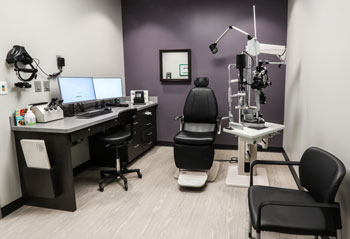 Cataracts are a natural part of aging. Most people will eventually develop
cataracts, which are protein buildups that cause the lens inside the eyes
to become cloudy. Fortunately, you don’t have to live with this
condition. It can easily be corrected – patients are often in and
out of the surgery center within three hours and back to normal activities
the next day.
Cataracts are a natural part of aging. Most people will eventually develop
cataracts, which are protein buildups that cause the lens inside the eyes
to become cloudy. Fortunately, you don’t have to live with this
condition. It can easily be corrected – patients are often in and
out of the surgery center within three hours and back to normal activities
the next day.
What are cataract symptoms?
- Blurred or cloudy vision
- Sensitivity to light and glare
- Halos around light
- Need for brighter than normal light to see or read
- Trouble with seeing at night
- Frequent changes to your glasses or contact lens prescription
- Fading or yellowing of colors
Why choose us for cataract surgery?
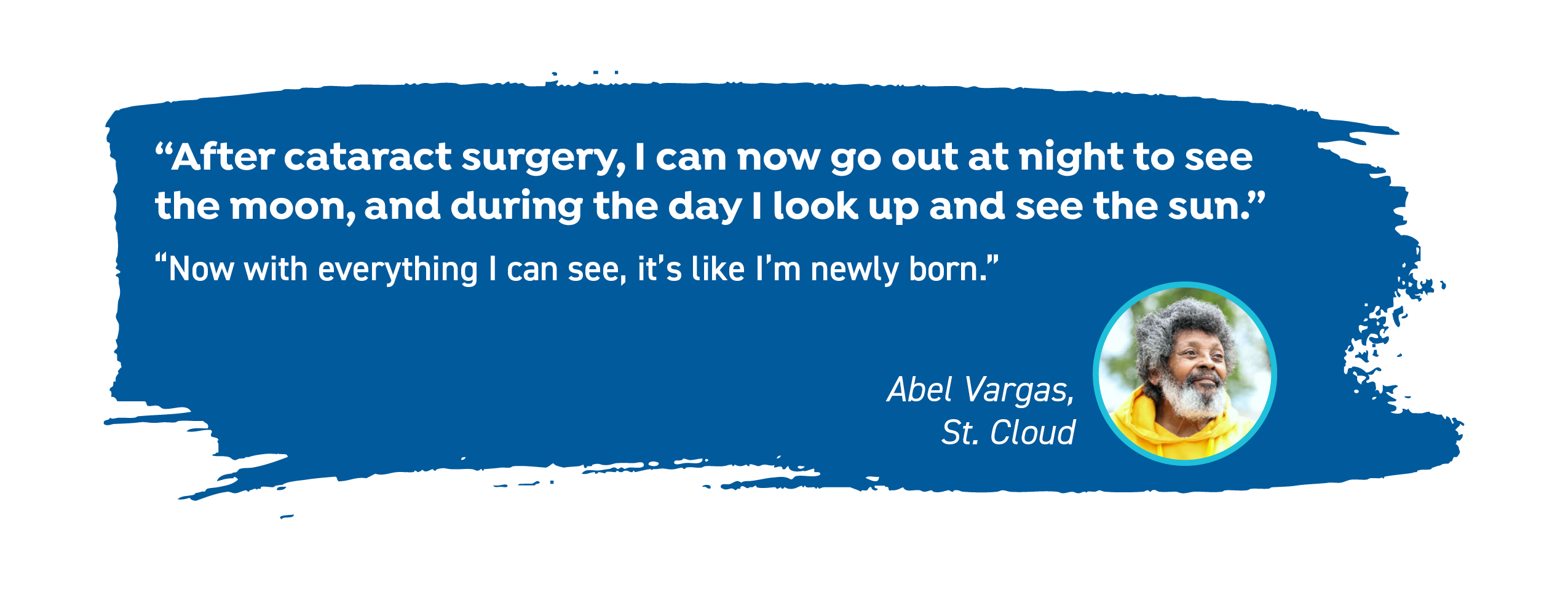
- Our team of eye surgeons has extensive training and expertise so that you can feel confident in the care you receive.
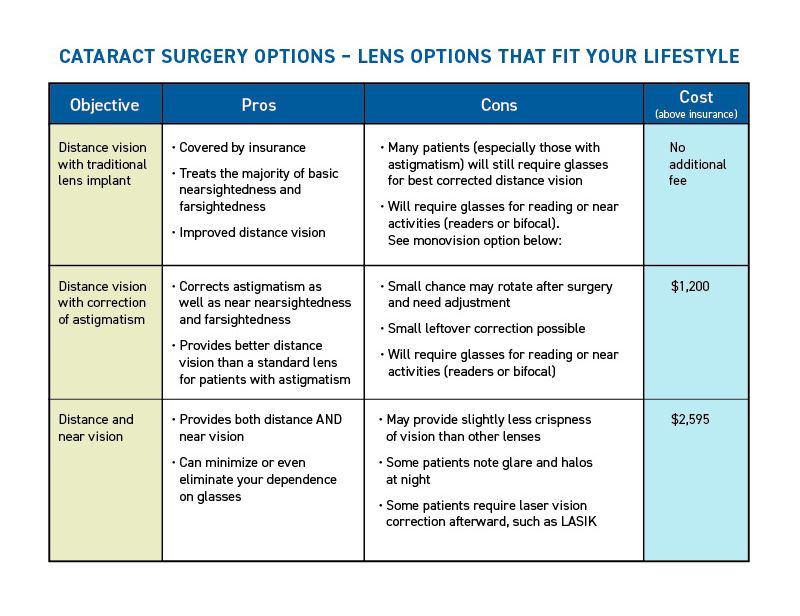
- If you're looking for something beyond a basic cataract lens, we can explore your candidacy for advanced technology implants that correct astigmatism and/or provide both near and distance vision.
- Our facilities have top-of-the-line equipment, diagnostic tools and technology, some of which are scarce in Central Minnesota, particularly when it comes to advanced technology implants. This means we can provide you with high quality care and the best possible results.
- Four convenient cataract surgery locations in St. Cloud, Long Prairie, Willmar and Redwood Falls.
- CentraCare's universal electronic medical record makes communication between your doctors easy, which is especially important because eye issues can often be the first sign of other health problems. You can also easily access your eye care records and communicate with us through MyChart.
Will cataract surgery improve my vision?
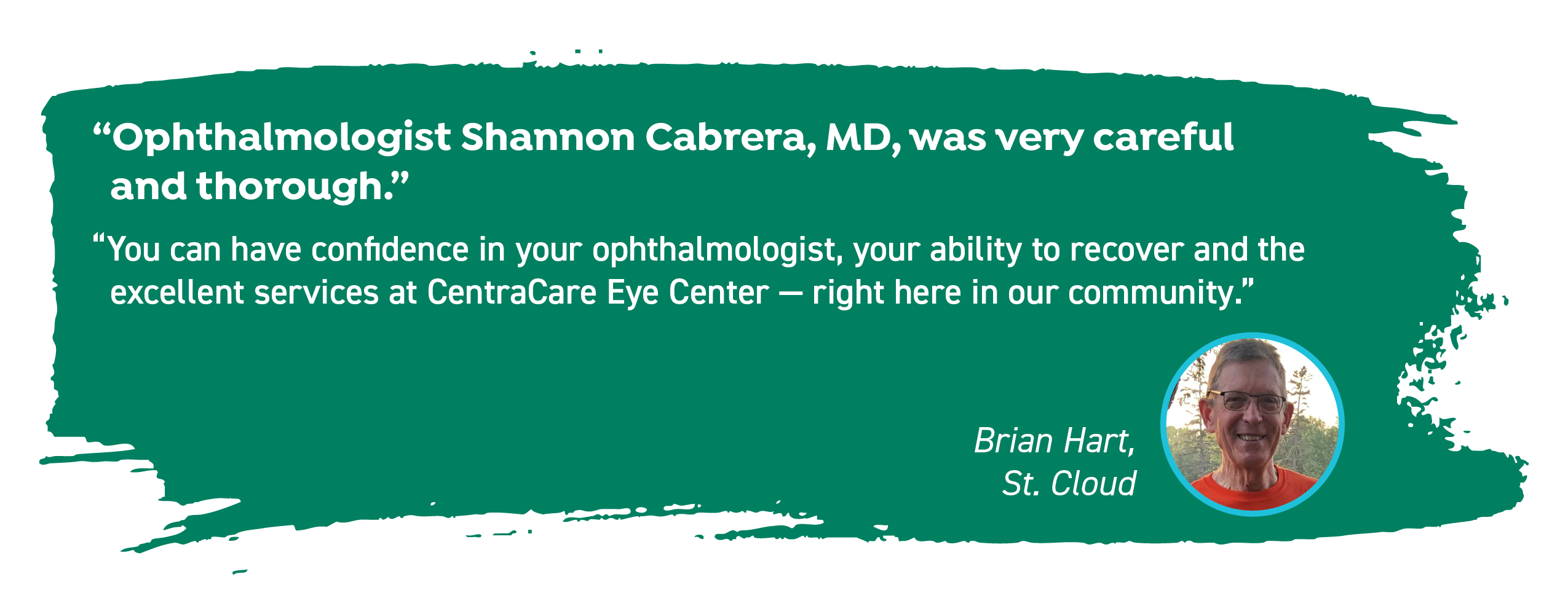
Cataract surgery should improve vision. About 95% of people report that they see better after the surgery.
Will cataract surgery give me 20/20 vision?
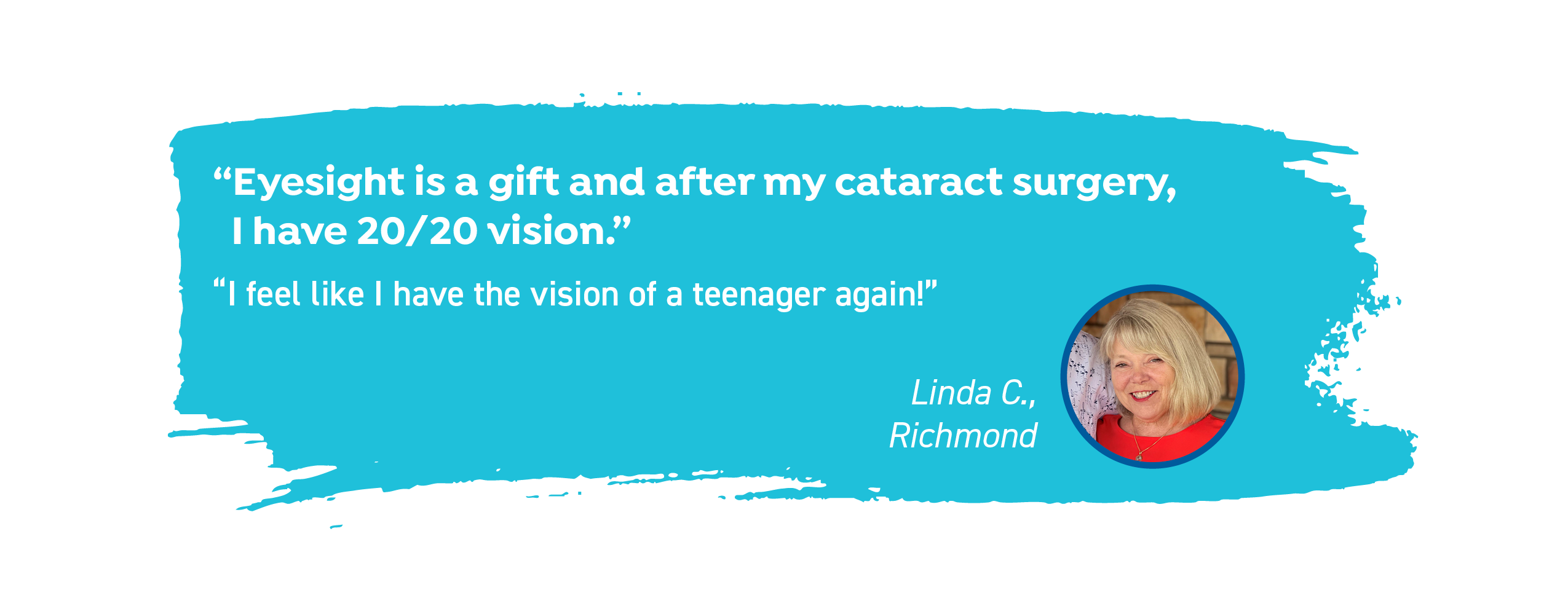
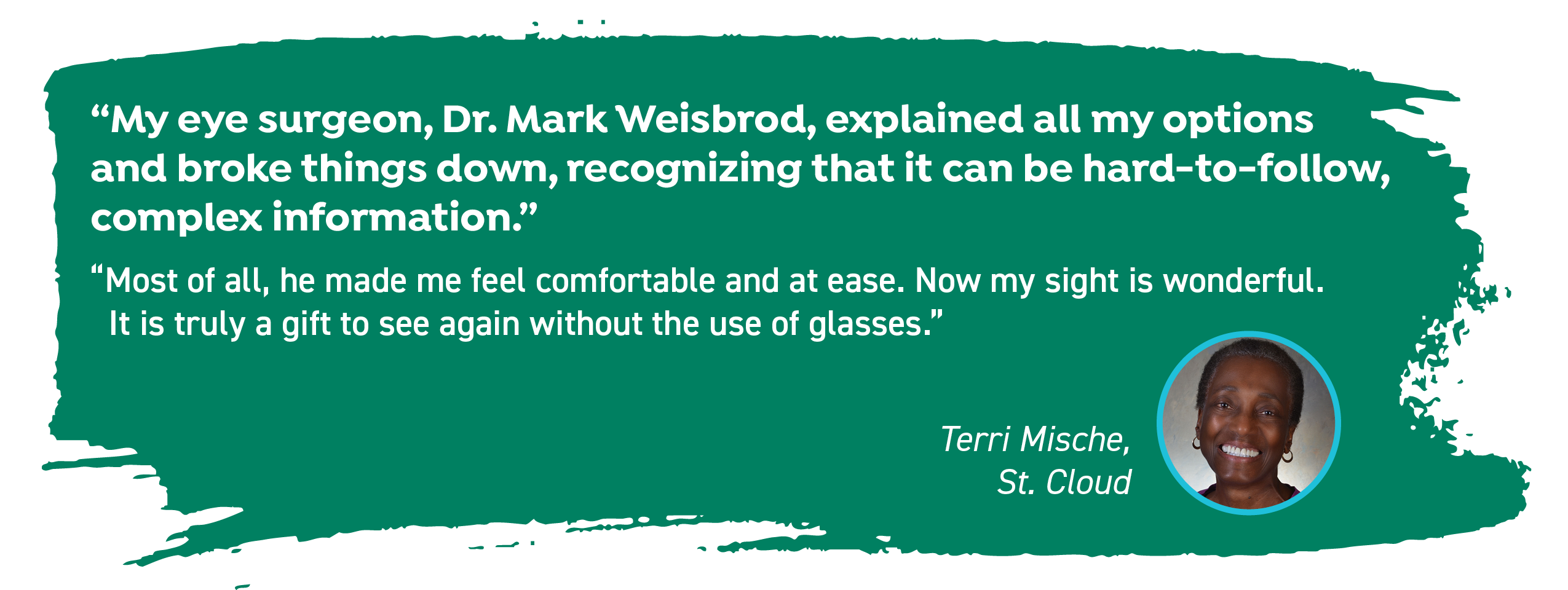
While we can never promise 20/20 vision, many patients achieve less dependence on glasses or even independence from glasses. Other people just need reading glasses after cataract surgery.
Can cataract surgery correct astigmatism?
People with astigmatism would need to wear glasses after surgery unless they were a candidate for a self-pay, advanced technology implant that corrects astigmatism.
Is cataract surgery safe?
As with any surgery, there are risks. However, cataract surgery is a highly successful procedure and is one of the most common surgeries in the United States.
Is it common to have cataract surgery redone?
After a successful cataract surgery, you will never need the procedure again in the same eye. However, the membrane in which we place your new artificial lens can become cloudy. But that can be easily cleared up with a quick, painless laser procedure right in our office.
How is cataract surgery done?
The only way to treat a cataract is to surgically remove the cloudy lens and replace it with an implant. The eye surgeon will make small slits along the side of your cornea. Using these slits and tiny instruments, the surgeon will reach in, locate the lens of the eye, break it up and remove it. The new lens will then be inserted. The surgery itself only takes about 15 minutes.
Is cataract surgery painful?
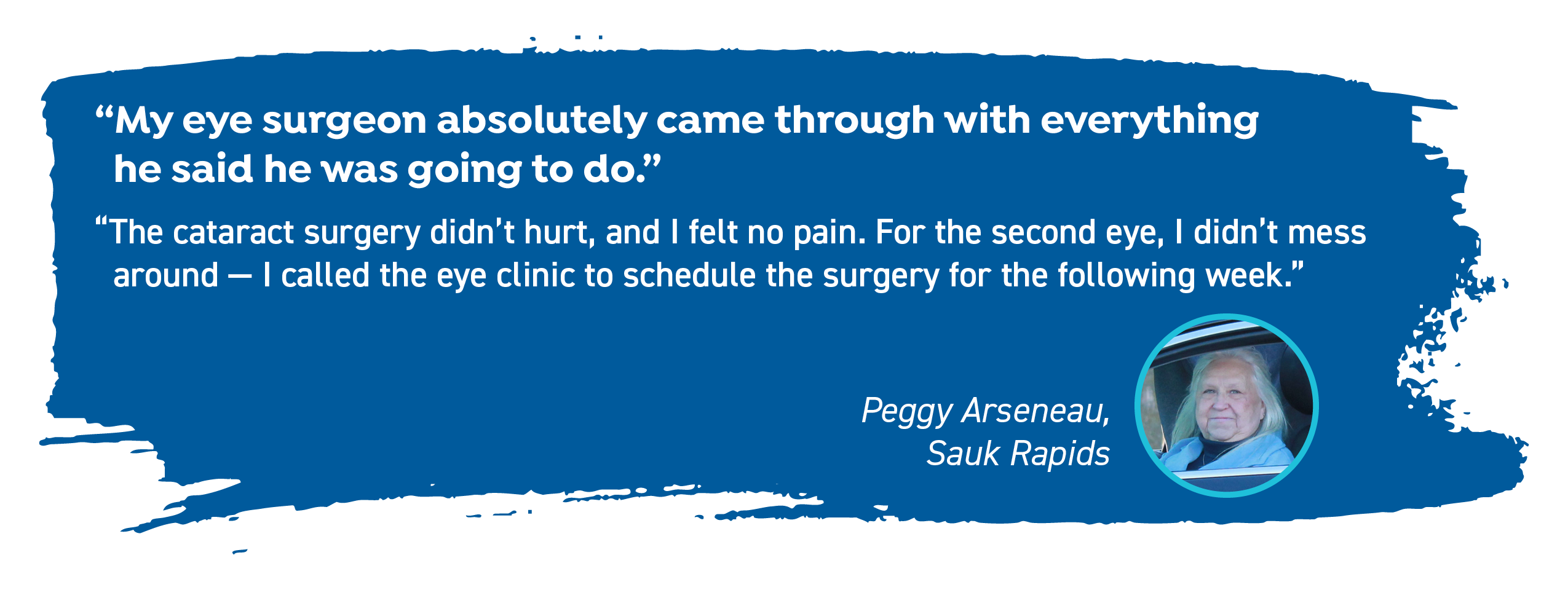
During the surgery you would typically be awake. You will receive anesthetic eyedrops to ease any possible pain. We may also give you some medicine to help you relax. Most patients experience only slight discomfort after cataract surgery, lasting only one to two days.
What is the recovery time after cataract surgery?
Most likely any discomfort associated with cataract surgery should disappear after a few days. You should be able to resume your normal activities the day after surgery. It may take up to six weeks to experience the full benefits of surgery to your vision.
Is cataract surgery performed on both eyes at once?
If you need both eyes corrected, your eye surgeon will perform cataract surgery on the first eye and then operate on the second eye a few weeks later.
How much does cataract surgery cost?
Cataract surgery is covered by insurance but subject to deductibles and co-insurance like much of your other care. Patients who are candidates and choose to receive advanced technology implants will face an additional “self-pay” component.
What are cataract lens options?
During cataract surgery, your surgeon will replace the cloudy natural lens
(cataract) with an artificial intraocular lens (IOL). In the past, everyone
basically received the same type of IOL. Today, there are advanced options
that offer significant advantages for certain patients.
Join the thousands of others in Central Minnesota who have had their vision improved at CentraCare Eye Center with cataract surgery or other eye services.
Eye Care locations:
-
CentraCare - St. Cloud Eye Center:
320-229-5120
2000 23rd Street South, Sartell, MN 56377 -
CentraCare - Willmar Skylark Clinic:
320-231-5040
1604 1st Street South, Willmar, MN 56201 -
CentraCare - Redwood Pavilion:
507-697-6675
1110 East Bridge Street, Redwood Falls, MN 56283 -
CentraCare - Long Prairie Hospital:
320-229-5120
50 CentraCare Drive, Long Prairie, MN 56347


